
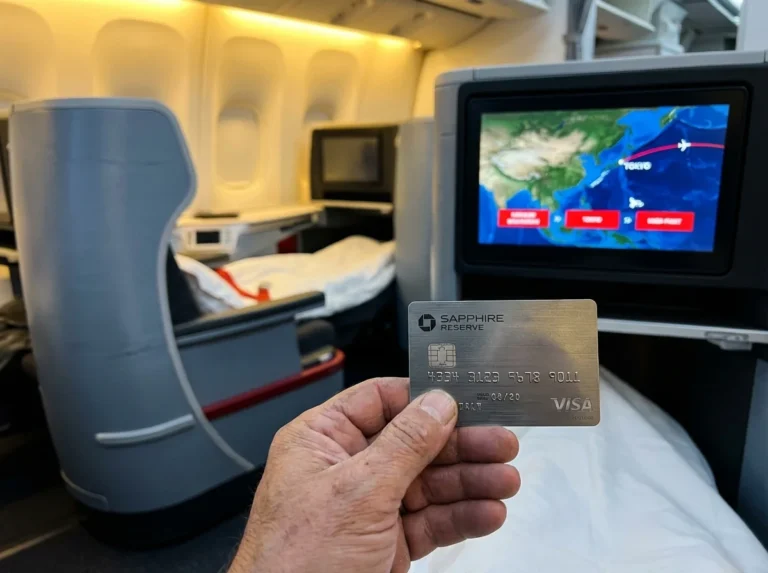
Chase Ultimate Rewards (UR) remains the operating system of choice for travel hackers in 2026. While other ecosystems like Amex and Capital One have closed the gap, Chase retains the crown for one specific reason: the floor value of its points is higher, and the ceiling is easier to reach.
If you treat loyalty programs like software—which you should—Chase is the most stable build. It offers high-velocity earning through the “Trifecta” and arguably the most valuable transfer partner in the industry: World of Hyatt.
However, blind loyalty costs money. In 2026, point devaluations and dynamic pricing algorithms have shifted the math. If you are still redeeming points for 1.25 cents each through the travel portal, you are essentially lighting value on fire.
This guide breaks down the exact mechanics of the Chase ecosystem for 2026, the specific math behind high-value redemptions, and why you have less than a week to maximize one of the best transfer bonuses of the year.
The Earning Engine: The 2026 “Trifecta”
Efficiency in travel hacking comes from earning points faster than inflation devalues them. The Chase ecosystem relies on a “hub and spoke” model.
You need one premium card (the hub) to enable transfers, and no-annual-fee cards (the spokes) to accelerate earning on everyday spend. If you are just starting, you can check our mathematically optimal beginner credit card setup to see how this fits into a broader strategy.
Here is the current optimal setup:
| Card Role | Primary Function | Earning Rate (Math) |
|---|---|---|
| The Hub (Sapphire Reserve or Preferred) | Unlocks transfer partners & portal bonus. | 3x Travel/Dining (Reserve) or 2x Travel / 3x Online Grocery (Preferred). |
| The Velocity Driver (Freedom Flex) | Maximizes rotating categories. | 5x on up to $1,500 quarterly. Math: Maxing this out = 30,000 points/year for $0 fees. |
| The Catch-All (Freedom Unlimited) | Captures non-category spend. | 1.5x on everything else. Crucial for tax payments, insurance, and medical bills. |
Pro Tip: Many “veterans” overlook the Ink Business Cash card. It earns 5x at office supply stores. Since these stores sell gift cards for Amazon, Netflix, and Whole Foods, you can effectively earn 5x on almost any household expense if you are willing to deal with the friction of buying gift cards.
Redemption Mechanics: Portal vs. Transfer
This is where most people fail. Chase gives you two paths to redeem points. One is easy and inefficient; the other requires effort but yields outsized returns.
Path 1: The Travel Portal (The Floor)
Depending on which card you hold, your points are worth a fixed rate when booking flights or hotels directly through Chase:
- Sapphire Preferred / Ink Preferred: 1.25 cents per point.
- Sapphire Reserve: 1.50 cents per point.
The Math:
If you book a $1,500 flight using a Sapphire Reserve, it costs 100,000 points ($1,500 / 0.015).
This is your “floor.” You should never accept a redemption value lower than this. If a transfer partner offers you a flight for 80,000 points but the cash price is only $600, do not transfer. Pay cash or use the portal, because 80k points should yield at least $1,200 in value.

Path 2: Transfer Partners (The Ceiling)
Transferring points 1:1 to airline and hotel loyalty programs is how you unlock 3.0+ cents per point (cpp). This is arbitrage. You are leveraging the partner’s award chart inefficiencies against the cash price of the ticket.
If you are debating whether to commit to this ecosystem versus others, read our detailed comparison on Amex vs. Chase: Which Ecosystem is Better? to see how the transfer partners stack up.
The 2026 Transfer Partner Hierarchy
Not all transfers are equal. I categorize Chase partners into three tiers based on mathematical return on investment.
Tier 1: The Essentials (High Value)
1. World of Hyatt
Hyatt remains the primary reason to hold Chase points in 2026. While Marriott and Hilton use dynamic pricing that often pegs points to ~0.6 cents, Hyatt retains a fixed award chart.
The Math:
A night at the Park Hyatt Kyoto often retails for $1,800 during peak cherry blossom season. The same room costs 45,000 Hyatt points.
- $1,800 / 45,000 points = 4.0 cents per point.
Compare this to the portal redemption (1.5 cpp), and you are getting nearly 3x the value by transferring.
2. Air Canada Aeroplan
Aeroplan is the Swiss Army knife of Star Alliance. It allows you to book United, Lufthansa, ANA, and Singapore Airlines flights, often for fewer points than United’s own program requires.
URGENT ALERT: There is a 35% transfer bonus currently active, but it expires in days. If you have immediate travel plans, read our breakdown: Last Call: Chase 35% Aeroplan Bonus Ends Jan 5. This bonus fundamentally changes the math for Q1/Q2 2026 bookings.
Tier 2: The Situationals (Good Value)
United MileagePlus:
United has removed its award charts, but for economy flights within the US, they can still offer decent value (1.3–1.6 cpp). They are reliable, but rarely spectacular. However, having instant access to United miles can save you when cash fares spike last minute.
British Airways (Avios):
Great for short-haul flights (e.g., American Airlines from Miami to the Caribbean or intra-Europe hops). Avoid them for long-haul due to massive fuel surcharges.
Tier 3: The “Do Not Touch” List (Value Traps)
- Marriott Bonvoy / IHG: Transfers are 1:1, but the points are worth ~0.6 cents. You lose ~50% of your value instantly. Never do this unless you are topping off an account for a specific redemption.
- JetBlue / Southwest: These are revenue-based programs. The points have a fixed value roughly equal to the portal rate. There is rarely an arbitrage opportunity here.
For a deeper dive on Star Alliance strategies specifically, including how to avoid surcharges, check our LifeMiles 2026 Guide.
Sweet Spots: Where the Math Wins
To demonstrate the power of transfers, let’s look at two specific sweet spots available right now in 2026.
1. Iberia Business Class to Madrid
While many airlines charge 80k+ points for a one-way business class ticket to Europe, Iberia (via British Airways or Iberia Plus) charges as little as 34,000 Avios one-way from the US East Coast (BOS/JFK) to Madrid during off-peak dates.
The Math:
Cash Price: $3,200 (Round Trip) -> ~$1,600 One Way.
Points Cost: 34,000.
Value: 4.7 cents per point.
2. Hyatt All-Inclusive Resorts
Hyatt’s Ziva and Zilara brands offer incredible value. A night at the Hyatt Ziva Cancun can cost $750+ for two adults. The points cost is often 25,000 to 35,000 points.
The Math:
$750 / 25,000 points = 3.0 cents per point.
This includes all food and drink, significantly increasing the “real” value of the redemption.
For official award charts and to verify current peak/off-peak dates, always check the official World of Hyatt redemption page before transferring.
Comparing the Premium Cards: Preferred vs. Reserve (2026 Update)
The 2025 refresh has transformed the Sapphire Reserve. With the annual fee hiking to $795, Chase has added over $1,500 in potential credits, but they require active management. It is no longer a “set it and forget it” card.
The New Sapphire Reserve Math:
| Benefit | Value | The “Catch” (Friction Level) |
|---|---|---|
| Travel Credit | $300 | None. Automatically applies to any travel. |
| “The Edit” Hotel Credit | $500 | High Friction. Split into two $250 credits (Jan-Jun & Jul-Dec). Requires 2-night minimum prepaid booking via Chase. |
| Dining Credit | $300 | Medium Friction. Split $150/$150 biannually. Valid only at “Sapphire Exclusive Tables” booked/paid via OpenTable. |
| StubHub Credit | $300 | Split $150/$150 biannually. Great for concert/sports fans; useless otherwise. |
| DoorDash & Lyft | ~$420 | Dribbled out in $10–$25 monthly increments. |
The “Real” Effective Fee:
If you naturally spend money on concerts (StubHub), nice dinners (OpenTable), and boutique hotels (The Edit), Chase is effectively paying you $1,000+ to hold this card.
Calculation: $1,820 in credits – $795 Fee = +$1,025 Net Value.
However, if you are a budget traveler who stays in Airbnbs and doesn’t buy concert tickets, you will likely leave the StubHub ($300), Dining ($300), and Hotel ($500) credits on the table. In that case, you are paying $495 for just lounge access.
The Verdict:
Get the Sapphire Reserve if: You are an “active” consumer who will use the StubHub, OpenTable, and “The Edit” credits. The value is undeniable for the lifestyle user.
Get the Preferred if: You want a low-stress card. You save $700 in upfront fees and don’t have to worry about “use it or lose it” credits every 6 months.
For most “optimizers,” the Sapphire Preferred is actually the superior choice if you already have lounge access through other cards (like the Venture X or Amex Platinum). If you are looking to audit your wallet, see our guide on what to do immediately after getting a new card.
Common Pitfalls to Avoid
1. The “Cash Back” Trap
Chase allows you to redeem points for cash at 1.0 cpp. Never do this. If you need cash, get a cash-back specific card. Redeeming UR points for cash is inefficient capital allocation.
2. Speculative Transfers
Transfers are irreversible. I have seen countless people transfer 100k points to Virgin Atlantic hoping to book ANA First Class, only to find the availability phantom or gone. Do airline miles expire? Yes, and once they are stuck in a partner account, they are subject to that airline’s expiration policies.
Rule: Never transfer until you have found the award space and are on the checkout screen.
3. Ignoring Transfer Bonuses
Chase frequently runs 20-40% transfer bonuses to British Airways, Air Canada, and Virgin Atlantic. Ignoring these is leaving free money on the table. Always check the “Rewards” dashboard before moving points.
FAQ: Chase Ultimate Rewards 2026
Does the Chase 5/24 rule still apply in 2026?
Yes. Chase will almost automatically reject your application if you have opened 5 or more personal credit cards (from any issuer) in the last 24 months. This rule is hard-coded into their approval algorithm. Business cards from most issuers (including Chase) do not add to your 5/24 count, but you must be under 5/24 to be approved for them.
Can I move points between my spouse’s account and mine?
Yes, Chase allows you to combine points with one member of your household. This is a powerful feature. You can pool points into the account that holds the Sapphire Reserve to unlock the 1.5 cents per point redemption rate for the entire household’s balance.
How long do Chase transfers take?
Most transfers are instant (Hyatt, United, British Airways, Aeroplan). However, some partners like Singapore KrisFlyer or Marriott can take 12-48 hours. Always verify transfer times on a resource like AwardWallet transfer time tracker before relying on an instant booking.
What happens to my points if I cancel my Sapphire card?
If you close your only card that earns Ultimate Rewards, you forfeit all unredeemed points. To prevent this, you should downgrade the card to a no-annual-fee Freedom card or transfer the points to a household member before canceling.