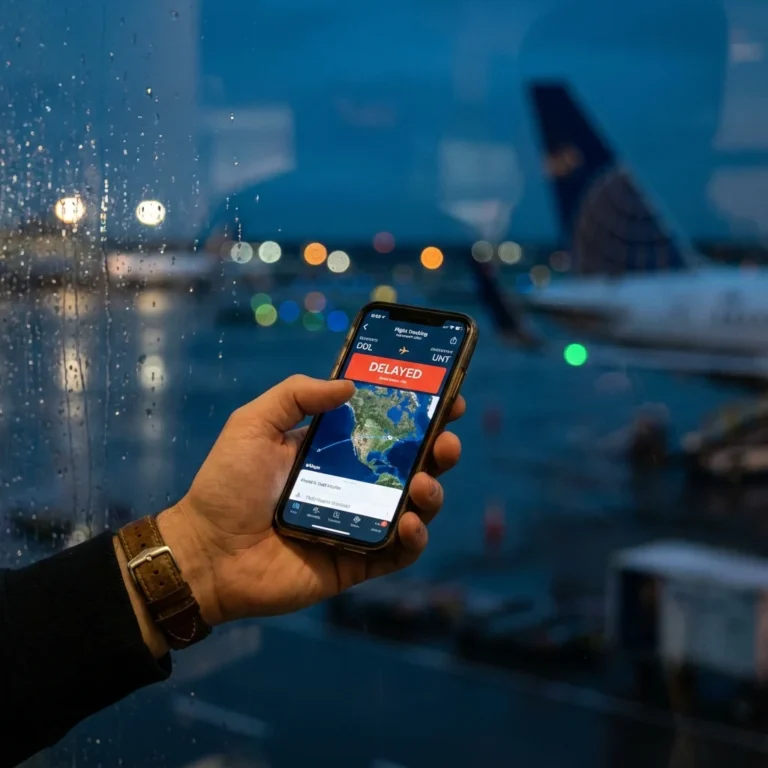
Most travelers treat flight delays like bad weather: an unpredictable act of God that simply happens to them. They stare at the departure board, trusting the “On Time” status until—minutes before boarding—it suddenly switches to “Delayed.”
This is a rookie mistake. In 2025, the aviation system is a transparent network of data points. If you know where to look, you can predict a delay hours before the airline admits it.
I treat every flight like a logistics puzzle. By tracking inbound aircraft, decoding FAA data, and understanding crew legality, I often rebook myself onto a better flight while other passengers are still waiting for the gate agent to make an announcement. Here is how to stop guessing and start anticipating.
The “Inbound Aircraft” Hack: The #1 Indicator
The single biggest reason for a delay is a “Late Arriving Aircraft.” Airlines hesitate to post this delay early because they hope the pilots might “make up time” in the air. You can calculate the truth yourself by tracking the specific tail number assigned to your route.
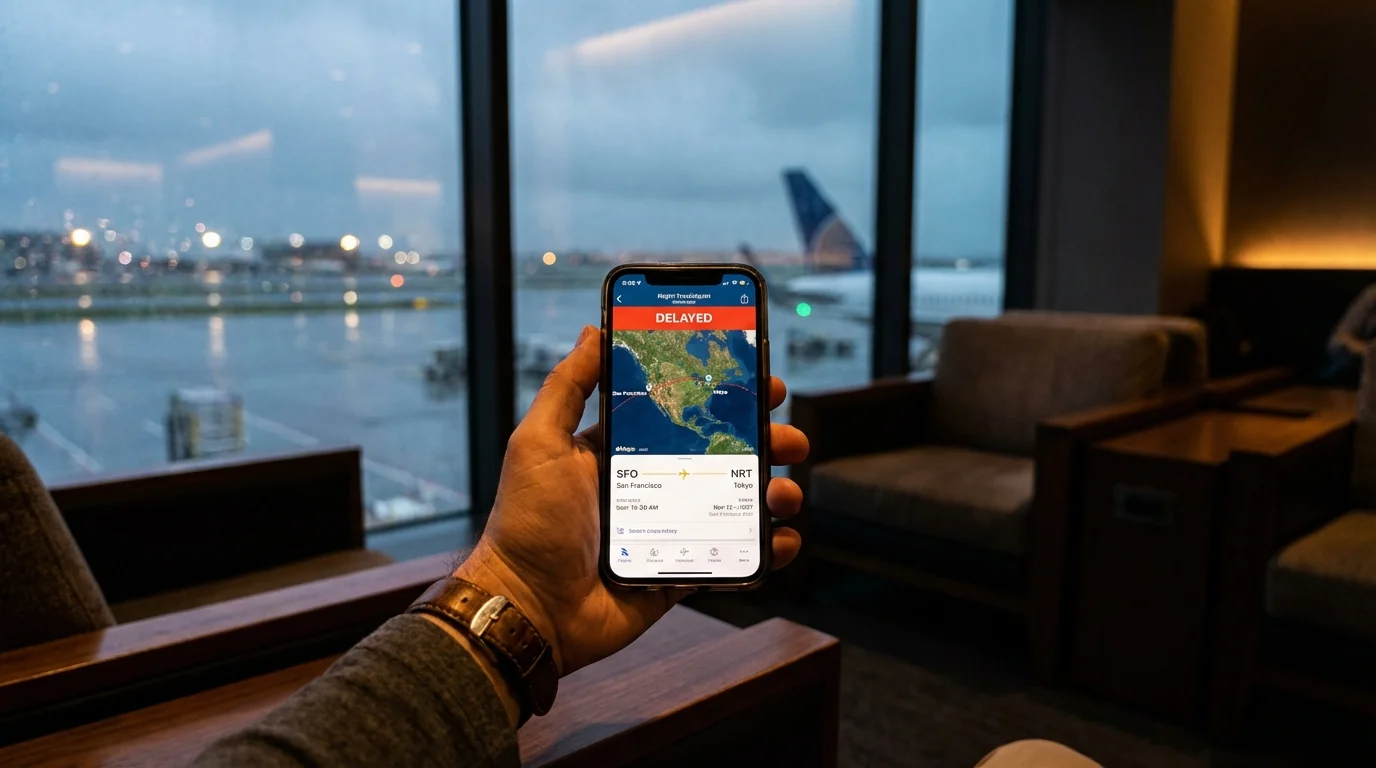
Every commercial plane has a unique registration code (e.g., N12345). Tools like FlightAware or FlightRadar24 allow you to see exactly where that specific metal tube is right now. If your flight is leaving New York at 4:00 PM, but the aircraft (N12345) is still sitting on the tarmac in Miami at 2:30 PM, your flight is physically impossible.
The Math of “Turn Times”
Even if the plane is in the air, you must calculate the “turn time”—the time required to park, deplane, clean, cater, and board. Here are the minimum safe buffers for 2025 operations:
- Narrowbody (737, A320): Needs 45–50 minutes.
- Widebody (777, A350): Needs 75–90 minutes.
- Regional Jet (E175): Needs 30–35 minutes.
The Calculation:
Your flight departs at 5:00 PM. The inbound plane lands at 4:40 PM.
Result: You have a 20-minute gap for a 45-minute process. Expect a minimum delay of 25–30 minutes, likely more once congestion effects kick in.
Top Apps for Delay Prediction (2025 Edition)
While you can do this manually, several apps now automate the “inbound tracking” process. I have tested dozens, and these are the only three worth your storage space.
| App Name | Best Feature | Cost |
|---|---|---|
| Flighty | Tracks inbound planes 25 hours in advance; predicts delays before airlines. | Freemium ($49/yr for Pro) |
| FlightRadar24 | Visual map of exactly where your plane is; 3D view of current weather. | Free / Silver / Gold |
| FlightAware | “Where is my plane now?” feature; excellent for private/charter tracking. | Free (Ad-supported) |
Decoding Weather Like a Dispatcher
Most travelers look at the weather outside their window and assume “Sunny = On Time.” This is false. Your delay is often caused by a thunderstorm in a hub three states away or wind shear restricting runway capacity.
Do not use a standard weather app. Instead, check the FAA National Airspace System (NAS) Status page at nasstatus.faa.gov. This is the dashboard real dispatchers use.
Look for these two specific terms:
- Ground Stop: No planes are allowed to depart to a specific airport. If you are flying to EWR and there is a Ground Stop, you are not taking off.
- Ground Delay Program (GDP): Traffic is being throttled. The FAA will assign specific “Expect Departure Clearance Times” (EDCT). If your pilot says, “We have a wheels-up time,” this is why.
Crew Legality: The Hidden “Timeout” Risk
Sometimes the plane is ready, the weather is perfect, but you still don’t move. This is usually a “crew legality” issue. Pilots and flight attendants have strict federal limits on how many hours they can work (duty days).
If your inbound flight was delayed by 2 hours, the crew might “time out” (reach their legal limit) upon landing. The airline then has to find a reserve crew, which takes 90 minutes to 2 hours. If it’s late at night, they may not have reserves available at all, leading to an overnight cancellation.
How to spot it: If your delay keeps creeping up by 30-minute increments, the airline is likely scrambling to find a new crew. This is the most dangerous type of delay because it often ends in cancellation.
Protecting Yourself Financially
When the delay becomes inevitable, you need to stop worrying about time and start worrying about money. In the US, airlines are generally not required to pay you cash compensation for weather delays or “air traffic control” issues. However, the DOT 2025 rules have clarified your refund rights.
If your flight is “significantly delayed” (3+ hours for domestic, 6+ hours for international) and you choose not to fly, you are entitled to an automatic refund to your original payment method—not just a voucher. But what if you still need to travel?
This is where your credit card strategy is vital. Premium travel cards offer Trip Delay Insurance. If your delay exceeds 6 hours (or requires an overnight stay), these cards will reimburse you for meals, hotels, and toiletries—often up to $500 per ticket.
I rely on this coverage constantly. Instead of sleeping on the floor, I book a hotel and a nice dinner, keeping the receipts for reimbursement. For a breakdown of which cards offer the best coverage (including the 6-hour vs. 12-hour trigger difference), read our guide on The Best Credit Cards for Trip Delay.
What To Do When The Delay Is Confirmed
Once you anticipate the delay, speed is your currency. While other passengers groan, you should act:
- Get Comfortable: Don’t wait at the crowded gate. If you have access, head to a lounge where the agents can often help you rebook faster than the gate staff. (See: Airport Lounge Access Explained 2026).
- Double-Book (Carefully): If the delay looks severe, search for alternative flights on other airlines. Do not book yet, but have the option ready.
- Check Insurance: Review your card’s policy to see if you need to pay for the delay expenses with that specific card. (See: Credit Card Travel Insurance: What It Really Covers).
Frequently Asked Questions
Can I get compensation for a 2-hour delay?
In the US, generally no. Airlines are not legally required to compensate you for delays unless it involves being bumped from an oversold flight. However, if the delay is 3+ hours (domestic), you can cancel for a full refund. In Europe (under EU261), you may be entitled to cash compensation for delays over 3 hours.
What is the best app to track inbound flights?
Flighty is widely considered the best for user-friendly inbound tracking, as it automates the process 25 hours in advance. FlightAware is a great free alternative if you manually search for the “Where is my plane now?” link.
Does the airline have to pay for my hotel if delayed overnight?
Only if the delay is “controllable” (e.g., maintenance, crew scheduling). If the delay is due to weather or Air Traffic Control, they do not owe you a hotel. This is why having credit card travel insurance is essential.
How accurate are the “Incoming Plane” arrival times?
Extremely accurate. Once a plane is in the air, its arrival time rarely fluctuates by more than a few minutes. If that arrival time plus 45 minutes is later than your departure time, a delay is mathematically guaranteed.