You are likely here because you found a Lufthansa Business Class award seat, looked at the price on Miles & More or Aeroplan, and saw a tax bill of $850. You are disgusted. You should be.
In the world of travel hacking, efficiency is everything. Paying carrier-imposed surcharges (often mislabeled as “fuel surcharges”) is the ultimate inefficiency. It is lighting money on fire.
Enter Avianca LifeMiles. Despite a frustrating website, nonexistent customer service, and a stinging devaluation in early 2025, LifeMiles remains the mathematically optimal currency for one specific mission: flying Star Alliance partners across the Atlantic without paying surcharge extortion fees.
This is your operational guide for 2026. We aren’t looking at fluffy “travel inspiration.” We are looking at the math, the specific booking codes, and the anomalies that let you fly Frankfurt to New York for $60 out of pocket instead of $900.
Why LifeMiles Wins on “Total Cost”
Novices look at the miles price. Veterans look at the Total Cost of Acquisition (Miles × Valuation + Taxes).
Let’s run the numbers on a standard flight: New York (JFK) to Frankfurt (FRA) in Lufthansa Business Class.
| Program | Miles Cost | Taxes & Fees | Effective Cost (USD)* |
|---|---|---|---|
| Avianca LifeMiles | 80,000 | $56.00 | $1,176 |
| Air Canada Aeroplan | 60,000 | $150.00 | $990** |
| United MileagePlus | 88,000 | $56.00 | $1,288 |
| Lufthansa Miles & More | 56,000 | $950.00 | $1,734 |
*Assumes a baseline valuation of 1.4 cents per point (CPP) for transferrable currencies.
**Aeroplan is cheaper in miles, but often prices dynamically higher on partner awards. If Aeroplan hits you with dynamic pricing, costs can soar to 100k+. LifeMiles is fixed.
While Aeroplan technically wins on the “paper math” for base rate, LifeMiles is the hedge against volatility. When Star Alliance partners release saver space, LifeMiles grabs it at a predictable price cap. More importantly, LifeMiles frequently sells miles at ~1.3 cents apiece. Buying 80,000 miles during a 140% bonus promotion costs roughly $1,040. Buying a $6,000 Business Class ticket for $1,040 is a 5.7x ROI.
The 2026 Sweet Spots (Post-Devaluation)
Following the February 2025 reshuffle, the legendary “63k to Europe” is mostly dead, replaced by an 80k standard. However, the LifeMiles pricing algorithm is notoriously glitchy, and “pricing anomalies” are your best friend.
1. The “Glitch” Routes to Europe (55k – 69k)
While the standard price is 80,000 miles, certain city pairs inexplicably price lower. Currently, the New York (JFK) to Zurich (ZRH) route on SWISS often prices at 55,000 LifeMiles in Business Class. This is one of the single best redemptions in the entire points ecosystem.
Another anomaly appears on routes connecting to Eastern Europe. Flying Chicago (ORD) to Warsaw (WAW) on LOT Polish Airlines sometimes prices at 69,000 miles. You must search segment-by-segment to find these.
2. Lufthansa First Class (120k)
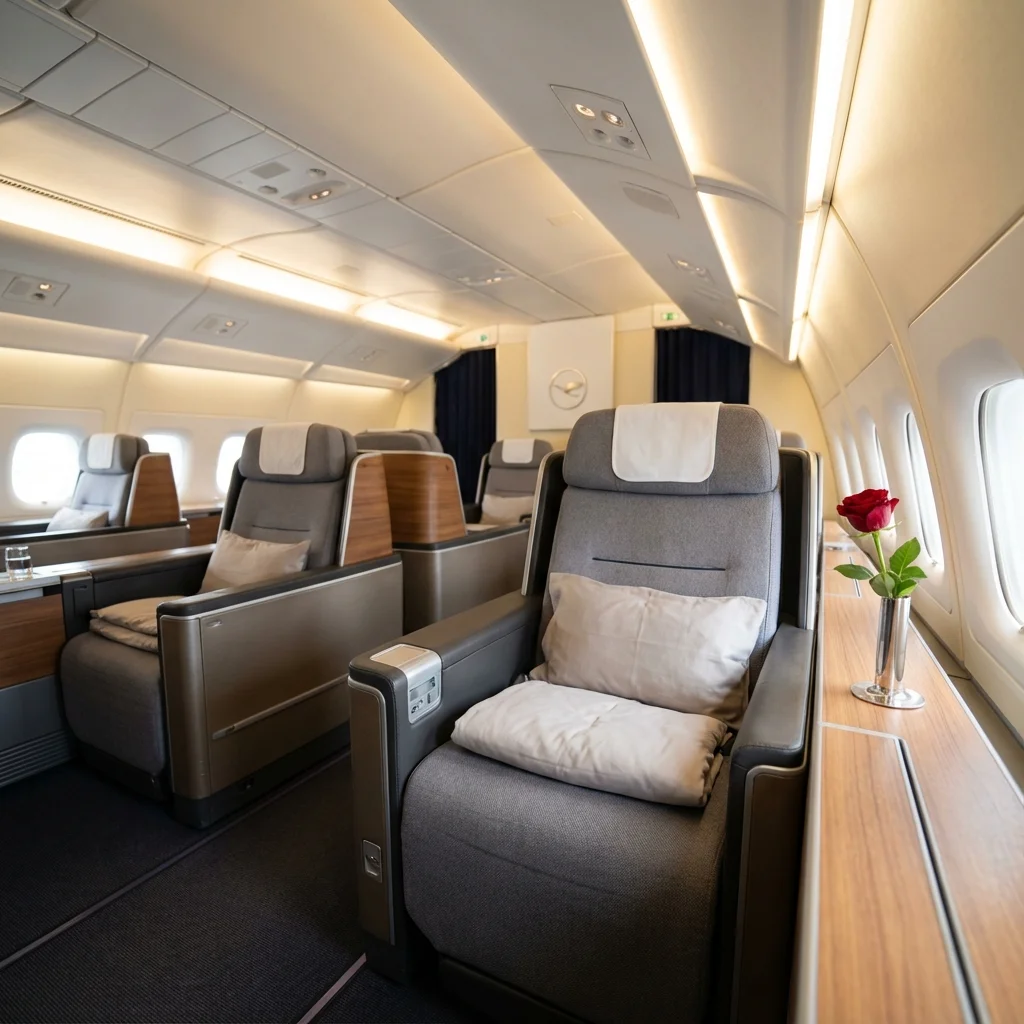
Lufthansa First Class is the holy grail. It is only released to partners (like LifeMiles) 14 days before departure (T-14). Do not bother searching 3 months out.
- Route: US West Coast (LAX/SFO) to Frankfurt/Munich.
- Cost: 120,000 LifeMiles + ~$60 taxes.
- Compare: Amex sweet spots via other programs might charge lower miles but will hit you with $800+ in fees.
- Pro Tip: LifeMiles sees the same availability as United. Use United.com to find the “Saver” First space, then book on LifeMiles.
3. The Mixed Cabin Hack
This is an advanced strategy. LifeMiles calculates the cost of an itinerary based on a weighted average of the cabins flown. If you fly 90% of the distance in Business and 10% in Economy, the system should charge you slightly less than a full Business award.
Sometimes, it charges you significantly less.
Example:
- Flight A: Frankfurt to Newark (Business) = 80,000 miles.
- Flight B: Frankfurt to Newark (Business) + Newark to DC (Economy).
- Result: The system might price the combined itinerary at 72,000 miles.
Warning: In late 2025, LifeMiles adjusted this logic. On some routes, adding a connection now increases the price. You must manually test this. If you find a mixed cabin itinerary that lowers the price, book it immediately. It is an error in your favor.
Step-by-Step: How to Avoid Ghost Availability
LifeMiles has a “phantom space” problem. The website often shows seats that don’t exist. If you transfer 80,000 Citi points and the booking fails, your points are stuck in Avianca purgatory forever.
The Validation Protocol:
- Find the Space: Use a tool like Seats.aero or United.com to find “Saver” (Class I or O) availability.
- Cross-Reference: Check Aeroplan. If Aeroplan sees the seat, it is likely real.
- The “Screenshot” Test: Log into LifeMiles. Go all the way to the payment screen where it asks for your credit card for taxes. If it lets you get that far, the space is real.
- Transfer Points: Only NOW should you transfer your points from Amex, Citi, or Capital One. Transfers are usually instant.
WARNING: The Change Fee Trap
LifeMiles is for firm plans only. In 2026, cancellation fees range from $50 to $200 per ticket. Changing a ticket costs $150.
Worse, the process often requires calling the contact center. Avianca’s call center is notorious for dropping calls, language barriers, and incompetence. If there is a significant schedule change or cancellation by the airline, you are entitled to a refund, but fighting Avianca for it can take months.
My Rule: I only book LifeMiles for travel within 60 days, where I am 95% sure I will not cancel. For speculative trips next year, I use United or Aeroplan.
Earning LifeMiles in 2026
You do not need to fly Avianca to earn LifeMiles. You can generate them instantly through major transferable currencies.
- Citi ThankYou Points: Transfers 1:1. Frequent 25% transfer bonuses. (See: Citi Transfer Partners Guide).
- Amex Membership Rewards: Transfers 1:1.
- Capital One Miles: Transfers 1:1.
- Bilt Rewards: Transfers 1:1.
Buying Miles Strategy:
Avianca runs “Buy Miles” sales roughly every 6 weeks. The bonus is typically 140%–160%, dropping the price to ~1.30 cents per mile. If you are eyeing a First Class ticket, it is often cheaper to buy the miles directly than to pay the cash fare. A $10,000 Lufthansa First ticket costs ~$1,600 if you buy the miles during a promo. That is 84% off retail.
Strategic Alternatives
Is LifeMiles always the answer? No.
If you are booking Turkish Airlines, check Turkish’s own Miles&Smiles program first. They charge 45k-60k miles for US-Turkey routes, which beats LifeMiles’ 80k. However, Turkish passes on fuel surcharges (approx $200-$300). You have to do the math: is saving 20k miles worth paying $200? Usually, yes.
If you are booking United Polaris, LifeMiles is often cheaper than United’s own dynamic pricing, which can hit 150k+ for partners. LifeMiles caps this at 80k.
Conclusion
LifeMiles is a “high friction, high reward” program. The website is dated, the support is nonexistent, and the change fees are punitive. But for a savvy traveler willing to navigate these hurdles, it remains the only way to fly Lufthansa, SWISS, and Austrian across the Atlantic without paying hundreds (or thousands) in surcharges.
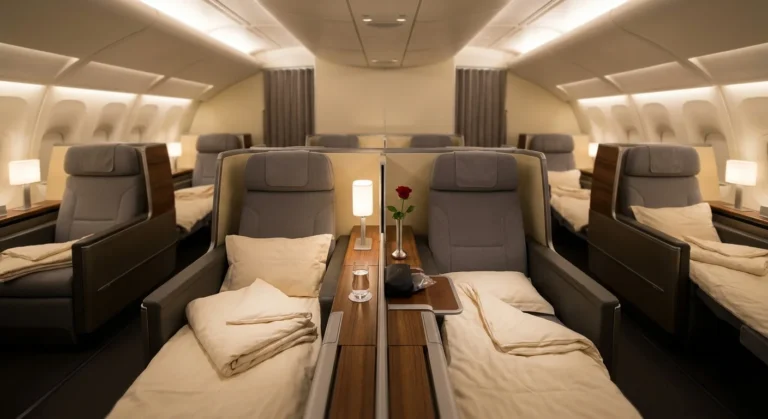
In 2026, the strategy is simple: Validate the space on United.com, buy or transfer the points instantly, and book. Once you are sipping champagne in Lufthansa First Class for $60 in taxes, the friction will feel very far away.
Frequently Asked Questions
Does LifeMiles pass on fuel surcharges for Lufthansa flights?
No. This is the primary benefit of the program. While Lufthansa Miles & More or Singapore KrisFlyer might charge $800+ in carrier-imposed surcharges for a transatlantic Business Class ticket, LifeMiles charges $0. You only pay legitimate government taxes (usually ~$60–$100).
Can I book Lufthansa First Class with LifeMiles in advance?
Generally, no. Lufthansa only releases First Class award space to partners like Avianca LifeMiles and United 14 days before departure. You must wait until the T-14 window opens to see the availability.
What is the current LifeMiles expiration policy?
LifeMiles expire after 12 months of inactivity. However, any earning activity extends the validity of your entire balance for another 12 months. This includes transferring 1,000 points from a credit card, buying miles, or crediting a flight.
Why can’t I see the same availability on LifeMiles as on United.com?
LifeMiles sometimes suffers from “blocking” where they cannot see or book specific partner space that other Star Alliance members can see. Additionally, United shows “Saver” space (X/I/O class) and “Everyday” space (dynamic). LifeMiles can ONLY access “Saver” space. If United shows a flight for 155,000 miles, that is not Saver space, and LifeMiles will not see it.