
The Economics of Buying Points: Why It Usually Fails
Loyalty programs are not charities. They are profit centers. When an airline or hotel chain sells you points, even with a “100% Bonus”, they are selling a currency they print at a significant margin.
Most travelers lose money on these transactions because they fail to account for the fundamental asymmetry of loyalty currency: Cash is liquid; points are not. When you convert $1,000 into 100,000 miles, you have locked that capital into a system where the airline controls the inventory, the pricing, and the expiration date.
However, inefficiencies exist. We exploit these inefficiencies. If you approach buying points like an arbitrage trader rather than a consumer, you can unlock outsized value.
See our guide to Understanding Point Valuations (CPP)
The Only Two Mathematical Scenarios Where You Should Buy
I don’t rely on feelings; I rely on arithmetic. There are exactly two scenarios where exchanging fiat currency for loyalty points makes sense.
Scenario A: The Luxury Arbitrage
This is the primary reason I participate in “Buy Miles” promotions. International First and Business Class tickets often have cash prices that are detached from reality—regularly exceeding $5,000 or $10,000.
However, the miles required to book these seats are often capped or fixed. This creates an arbitrage opportunity.
The Math:
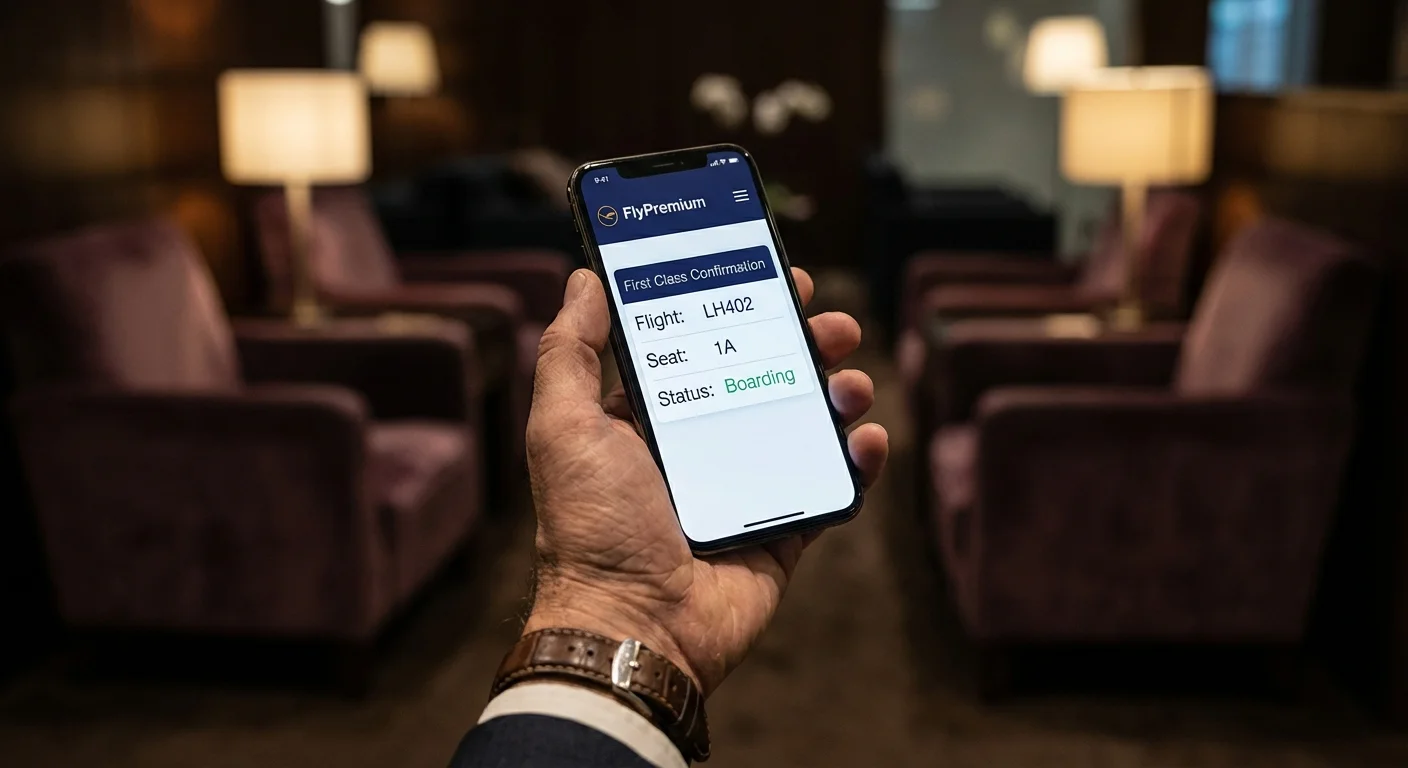
- Goal: Lufthansa First Class from Frankfurt to Los Angeles.
- Cash Price: $8,200 one-way.
- Miles Required (via Avianca LifeMiles): 87,000 miles.
- Promotion: LifeMiles sells miles with a 145% bonus, bringing the cost to ~1.25 cents per mile.
The Calculation:
- 87,000 miles × $0.0125 cost per mile = $1,087.50 total cost.
- Taxes & Fees = ~$100.
- Total “Bought” Price: $1,187.50.
The Yield:
($8,200 Cash Price – $100 Fees) ÷ 87,000 Miles = 9.3 cents per point (CPP).
Since you bought the points for 1.25 cents and redeemed them for 9.3 cents, you have achieved a massive return on investment. You are flying an $8,000 product for barely over $1,000. This is the only time aggressive buying is logical.
Scenario B: The Strategic “Top-Off”
You have 55,000 miles in your account. The award flight you need costs 60,000 miles. You are short 5,000 miles.
In this scenario, cost-per-point matters less than the cost of replacement. If you don’t buy the points, you might have to pay cash for the ticket.
The Math:
- Ticket Cash Price: $600.
- Miles Needed: 60,000.
- Current Balance: 55,000.
- Cost to Buy 5,000 Miles: $150 (often expensive for small amounts).
If you pay the $150, you secure a $600 flight using your existing sunk-cost miles. If you refuse to buy the points, you pay $600 cash. Spending $150 to save $600 is an immediate win, even if the per-point purchase price is high.
The Trap of “Speculative Buying”
This is where 90% of beginners fail. They see a “100% Bonus” email, buy 100,000 points for $1,500, and let them sit in their account waiting for a “dream trip.”
Do not do this.
Airline and hotel programs are dynamic. They can, and do, devalue their currency without warning. This is inflation on steroids.
Historical Devaluation Risks:
- United Airlines (2023): Increased award rates to Europe by 30% overnight without notice.
- Virgin Atlantic (2021): Devalued Delta One partner awards drastically.
- Hyatt (Annual): Shifts properties into higher categories every March.
If you cannot find the award space, click “Book,” and confirm it within 10 minutes of buying the points, do not buy the points.
Check DOT regulations on airline refunds and consumer rights.
Analyzing the Best Programs for Buying Points
Not all points are created equal. Some currencies are frequently sold at rates that make mathematical sense for luxury travel. Others are almost never worth purchasing.
| Program | Typical Sale Price | Good Buy? | Best Use Case |
|---|---|---|---|
| Avianca LifeMiles | ~1.2 – 1.3 cents | YES | Star Alliance First Class (Lufthansa/ANA) without fuel surcharges. |
| Hilton Honors | ~0.5 cents | YES | High-end resorts (Waldorf/Conrad) where cash rates exceed $800/night. |
| Alaska Mileage Plan | ~1.85 cents | Maybe | Cathay Pacific or Starlux Business Class to Asia. |
| Delta SkyMiles | ~3.5 cents | NO | Never buy. Redemption value is fixed near 1.2 cents. You lose 60% immediately. |
| Marriott Bonvoy | ~0.8 – 0.9 cents | Rarely | Only for topping off for a 5th Night Free award. |
Hidden Costs: Taxes, Limits, and Processing
When calculating your “Cost Per Point,” you must look at the final checkout price, not the headline rate.
1. The “Tax Recovery” Fee
US-based airlines (like American, United, Delta) charge a federal excise tax of 7.5% on purchased points. That “cheap” deal just got 7.5% more expensive. International programs (like Avianca or Aeroplan) generally do not charge this tax if the transaction is processed outside the US, though your credit card might charge a foreign transaction fee.
2. Transaction Coding
Most loyalty programs do not process point sales themselves. They use a third-party vendor called Points.com. This matters for your credit card strategy.
If you buy $1,000 worth of points using a card that earns 3x on “Travel,” you will likely only earn 1x, because Points.com usually codes as “General Merchandise” or “Business Services,” not travel.
3. Annual Purchase Limits
Most programs cap the number of points you can buy per calendar year (often 100k – 150k pre-bonus). If you are planning a trip for a family of four, you may hit this cap quickly.
Step-by-Step: How to Execute a “Buy Points” Booking
If you have done the math and decided to proceed, follow this strict protocol to avoid getting burned.
Step 1: Find the Award Space First
Do not buy points yet. Go to the airline’s website and search for the award flight. Verify that the “Saver” level space is available. If you don’t see the seat, buying points is useless.
Step 2: Verify “Phantom Availability”
Sometimes an airline website shows a seat that isn’t really there. This is called phantom availability.
To verify, click through the booking process until you reach the page asking for passenger details or payment. If it errors out, the space was phantom. If it lets you proceed, the space is real.
Step 3: Buy the Points Instantly
Open a new tab. Log in. Buy the points. Most transactions via Points.com are instant, but some programs (like ANA or smaller carriers) can take 24-48 hours. Stick to programs with instant transfers like United, Hilton, or Air Canada Aeroplan for safety.
Step 4: Book Immediately
Switch back to your booking tab. Refresh the page (your points balance needs to update). Finalize the booking.
Learn more about airline ticketing standards
Pro Tip: The Hilton “Buy 4 Get 5” Strategy
One of the most consistent arbitrage opportunities in travel is purchasing Hilton points during a 100% bonus sale (usually 0.5 cents per point) and combining it with the “5th Night Free” benefit for elites.
Example: The Waldorf Astoria Maldives often costs $2,500+ per night.
- Cost in Points: 150,000 per night.
- 5 Night Cost: 600,000 points (pay for 4, get 5th free).
- Cost to Buy 600k Points: $3,000.
- Retail Value: $12,500+.
You essentially buy a $12,500 vacation for $3,000. This is aggressive, but mathematically sound.
Final Analysis: Is It Worth It?
Buying points is not for casual travelers. It is a tool for those who treat travel planning like financial planning.
If you are looking to save money on Economy flights within the US or Europe, the answer is almost always NO. Cash fares are too competitive, and point costs are too high.
If you are looking to fly International Business Class or stay in 5-star luxury hotels, the answer is YES, provided you find the availability first. The arbitrage gap between “price of points” and “price of luxury cash fares” is where we live.
Frequently Asked Questions
Do purchased points count toward elite status?
Generally, no. Purchased points are considered “Bonus Miles” or “Redeemable Miles.” They do not count toward Million Miler status or annual elite qualification metrics (EQMs), with very rare exceptions during specific airline promotions.
Can I get a refund if I don’t use the points?
No. Point purchases are non-refundable. Once the transaction clears, you own that currency forever (or until it expires). This is why verifying award availability before clicking “buy” is critical.
Does it make sense to buy points for Economy flights?
Almost never. Economy tickets usually yield a value of 1.0 to 1.3 cents per point. Since most airlines sell points for 1.8 cents or higher (even with a bonus), you would be paying more for the points than the cash ticket is worth.
Which credit card should I use to buy points?
Since point purchases usually code as “General Spending” rather than “Travel,” use a card that maximizes non-category spend. A card earning 2% cash back or 2x transferable points on all purchases is ideal to minimize your cost basis.